


Read time: 3 Min
Outlook users are well aware of the OST file and its uses; it is an offline copy of the user’s mailbox data. OST file allows users to access their email data in offline mode. The changes made to the OST file are synchronized to the server when the connection is available. With time, the mailbox size increases, and so does the size of the OST file. Due to a large OST file Outlook application freezes frequently and also leads to slow performance. To avoid all these issues, it is always a better idea to split large OST file in a secure and efficient manner.
Why is it Important to compact a large OST file?
With a large OST file, you can face various issues, some of the common ones are:
- Slow performance: With an oversized OST file, you can face the slow Outlook performance issue. An increased amount of data will take a lot of time to open, thus it is necessary to split large OST file.
- Data Corruption: Since the OST file is prone to corruption, it is possible that the large OST file can be damaged beyond recovery. Compacting the OST file into small-sized files is the best option.
- Sync errors: If your OST file is large in size, it can cause synchronization issues with Exchange/Office 365.
- Difficult management: Managing an oversized OST file is a difficult task. For better management, you can break a large OST file into smaller files.
How to Split Large OST File Manually?
Here in this section, we will discuss two manual solutions to compact a large OST file. However, this solution will work only if you are using the active Outlook profile from which the OST file is generated. Let’s check out both of them:
Option 1: Using the Outlook Export Option
- Open Outlook and click on the File option.
- After that, Select Open & Export > Import/Export.
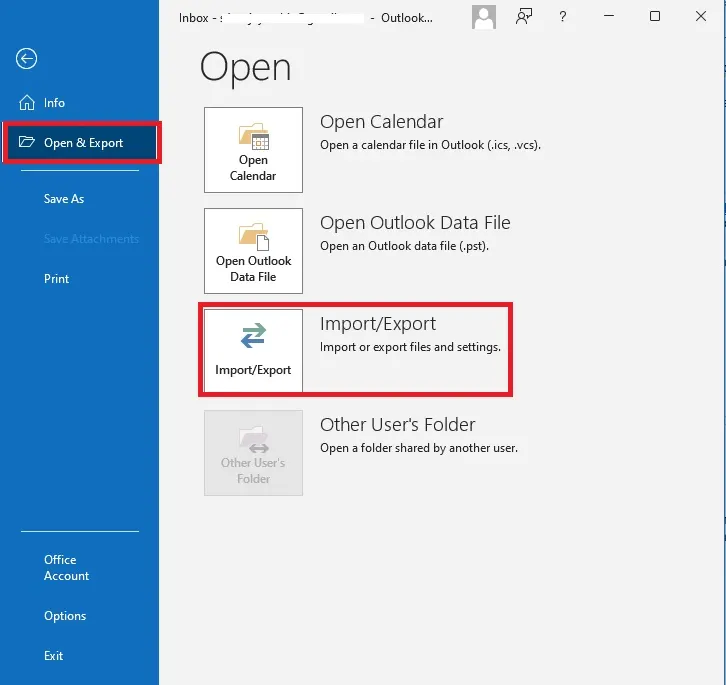
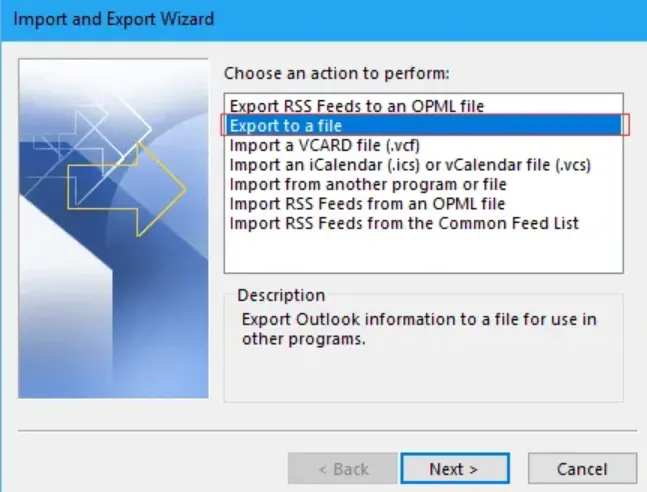
- Export to a File > PST File.
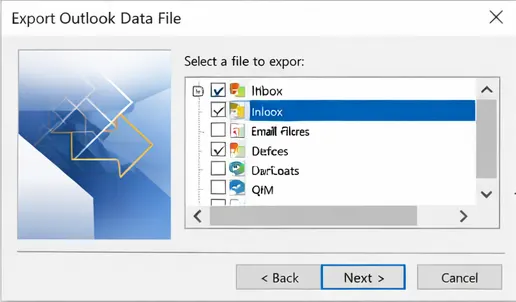
- Choose the important folders.
- Browse the saving location and save the .pst file.
Here you takeout OST emails to PST with only important data.
Option 2. Use the Auto Archive Feature
Outlook has an auto-archiving feature that allows users to save OST emails into PST file. Here are the steps:
- Go to File > Options > Advanced > AutoArchive Settings.
- Set a time period (e.g., archive items older than 6 months).
- Outlook creates smaller PST archives automatically.
Here are a few solutions to compress the large OST file into smaller parts. However, this method works with an active Outlook profile and is suitable for small amounts of data.
Expert Solution to Split OST File
With the BLR OST to PST Converter tool, you can easily reduce the oversized OST file in a few simple clicks. The tool will effortlessly split large OST file into smaller .pst files without any data loss. All you need to do is add the large OST file and choose PST from the export option. After that, select the split the result PST option and choose the size of the data file. This OST splitter tool will start compacting your large OST file in a few seconds.

Most importantly, this software supports OST files from Outlook 2021/2019/2016 and all other versions. Download the demo version of the software to know how it works.
Why Choose BLR OST Splitter Tool Over a Manual Solution?
With this automated tool, there are various outstanding features, including:
- Even if the OST file is corrupt or damaged, this tool will split it without any data loss.
- Additionally, you can also export OST file to PDF, CSV, EML, and many other file formats.
- Preserve email key elements and attributes – to, from, cc, attachments, inline images, and all other.
- You can use the filter option to split OST file by date.
- This software maintains email folder hierarchy and structure while splitting a large OST file.
- Option to save the split file by size (in GB or MB).
- Using this tool, you can also move the OST file to Office 365, Gmail, or many other email clients.
- A free demo version is also available to see how the tool works to reduce the OST file size.
Conclusion
Splitting a large OST file into smaller files is one of the major requirement for users who frequently faces slow Outlook problems. We have discussed both manual and automated solutions to split a large OST file. The manual method has limitations in that it needs access to the original Outlook profile, while the automated solution can also work on orphaned OST files.