


Read time: 3 Min
Outlook OST depends heavily on the Exchange Server availability, and when the Exchange Server fails, OST files become inaccessible. Therefore, exporting the OST file to a standard format, i.e., compatible with multiple email clients, is suggested. Converting OST emails to a MSG file helps to overcome such situations. MSG is a single file that saves a single Outlook email with message body, header info, attachments, inline images, etc. This article focuses on the most common methods to convert OST to MSG file.
Why Convert OST to MSG Files?
There are several factors that influence the decision to export OST emails to MSG format. We have highlighted some of the most common reasons below:
- Saving your important emails in a single file for backup and record purposes, the MSG file is the best one.
- If you have to share information with your colleagues and non-Outlook users, then converting emails to MSG will be helpful. You don’t need to share your complete mailbox data.
- It helps to reduce the size of the OST file when the OST file is too large.
- If you wish to transfer OST emails to another Outlook profile, then you can do it by converting them into .msg files.
Steps to Convert OST Emails to MSG Files Manually
If you have the active Outlook profile from which OST file is created, then you can opt for a manual solution. If you are trying to convert not accessible OST file, then you need an automated tool for that. Here are the two methods –
Step 1: Drag-and-Drop in Outlook
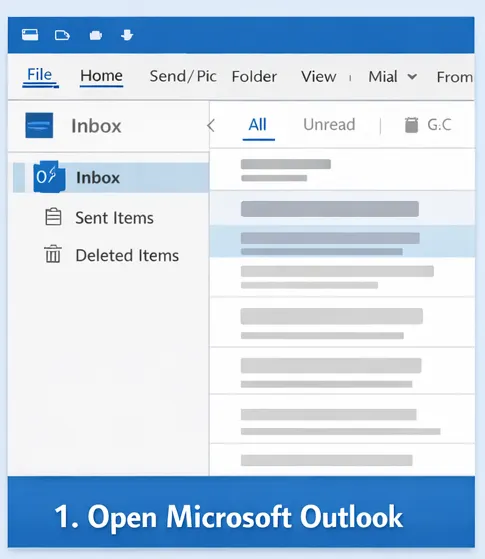
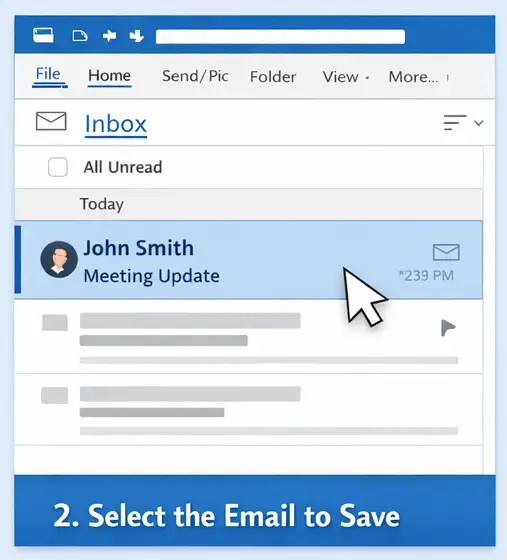
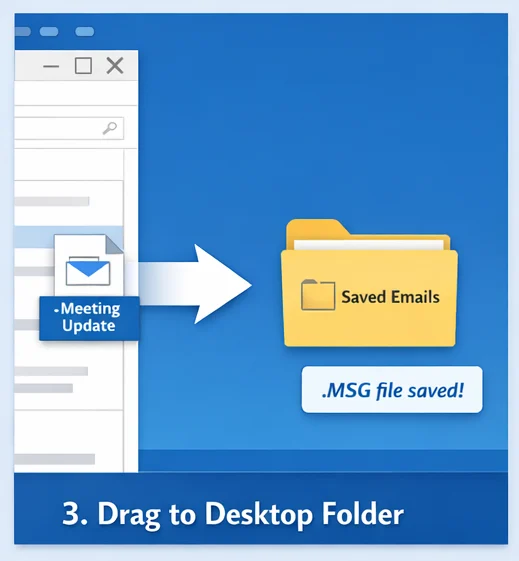
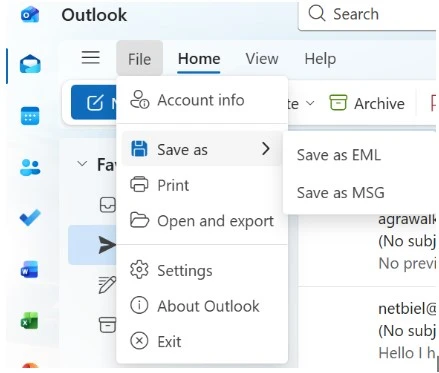
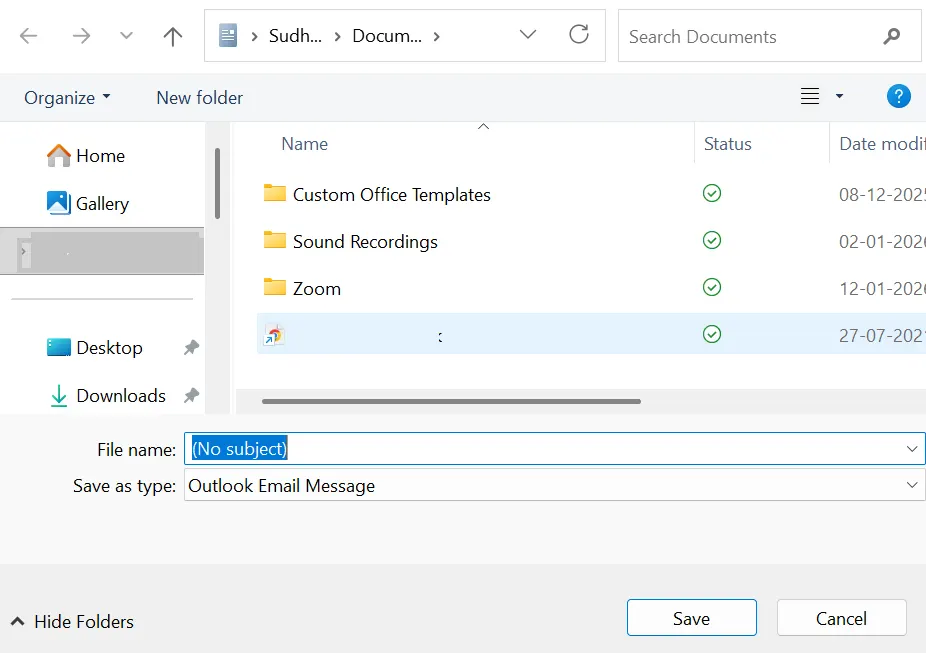
Step 2: Use the “Save As” Option in Outlook
Drawbacks of manual methods
Before moving OST emails to MSG format manually, one must know the potential risks involved while performing the task. Here are some common risks associated:
- The manual method may damage the data structure and folder hierarchy of the OST file.
- Moving emails from an oversized OST file can be tedious and time-consuming.
- If the OST file is damaged or corrupted, it can’t be exported to the OST file manually.
- Manual method is not suggested in case of emails holding sensitive information as this may result in data leaks.
How to Convert OST to MSG Files in Bulk?
BLR OST to PST Converter Tool will effortlessly convert all your emails without any data loss. Most importantly, the software supports converting emails from an orphaned or damaged OST file. While converting emails, this ost to pst tool maintains the email folder and sub-folder structure and hierarchy. Just add the OST file and choose the MSG as a saving option, and the tool will convert your emails.

Additionally, using this tool, you can also convert OST to EML, MBOX, PDF, and many other file formats. You can try the demo version to analyse how the software works.
Conclusion
Converting OST emails to MSG offers a practical method to share emails, take a backup, and manage your mailbox. While manual methods that we discussed above work well for a smaller number of emails, large mailboxes require the use of a dedicated tool that supports bulk conversion.